Does a GPS Tracker Drain a Motorcycle Battery? | SIZZAPP
Does a GPS tracker drain your motorcycle battery? Understand power consumption, sleep modes and how to keep your bike tracked during winter storage.
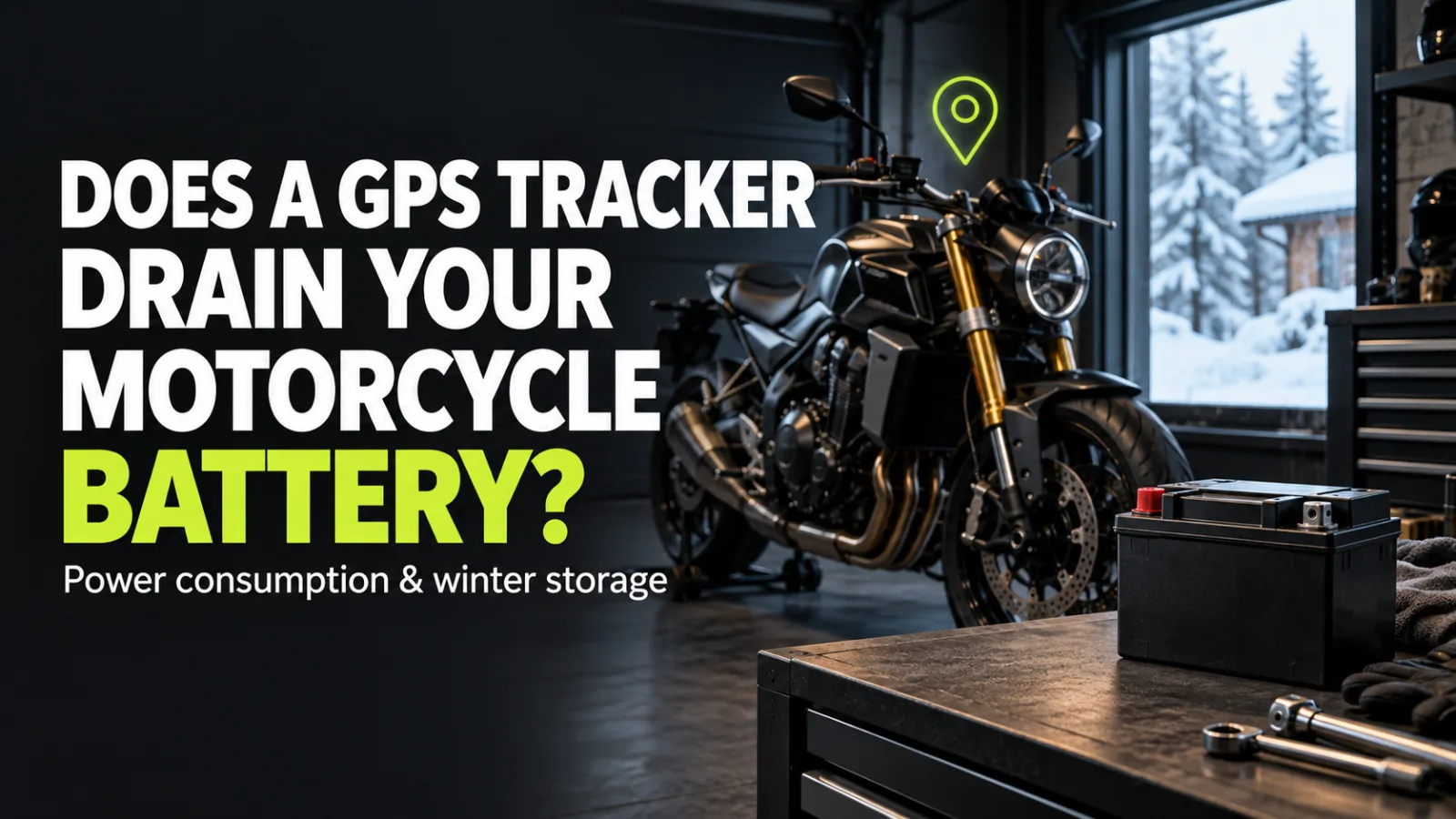
Does a GPS Tracker Drain Your Motorcycle Battery?
Yes, a hardwired GPS tracker uses power from your motorcycle battery, including when the engine is off. Whether that consumption becomes a problem depends on the tracker’s average power draw, your battery’s condition and how long the motorcycle stays parked.
That does not mean you have to choose between tracking your motorcycle and keeping it ready to ride. It means you should understand how your tracker works—and plan battery maintenance for longer periods of storage.
Here is what matters when choosing and using a motorcycle GPS tracker.
Why a GPS tracker uses power when your motorcycle is parked
A motorcycle security tracker needs to remain ready to detect movement and communicate with its tracking service.
Depending on the device and its settings, it may use energy to:
• Detect movement or other events.
• Obtain a GPS position.
• Send location updates over a mobile network.
• Monitor external power.
• Recharge its internal backup battery.
Some trackers reduce consumption by entering a sleep mode while the motorcycle is stationary. Others communicate more frequently or keep more functions active.
The useful question is not simply whether a tracker uses power. It is how much power it uses over a realistic period of parked operation.
Motorcycle batteries are generally smaller than car batteries, which makes accessory consumption particularly relevant during extended inactivity. Teltonika identifies this as a specific consideration when designing motorcycle tracking systems.
How much battery power does a motorcycle GPS tracker use?
There is no single figure that applies to every tracker.
Consumption can vary with the device, firmware, configuration, movement events, communication activity and backup battery charging. A published sleep-mode figure describes one operating state; it does not necessarily describe the average consumption over an entire day.
When comparing devices, look for answers to these questions:
• Is the specification for active operation, sleep mode or a measured average?
• At what supply voltage was it measured?
• How frequently does the tracker communicate while parked?
• What wakes the tracker from sleep?
• Does the measurement include charging the internal battery?
Those details make a power-consumption claim much more useful.
Understand the difference between mA and mAh
Milliamps (mA) measure current: how much electrical current a device is drawing at a particular moment.
Milliamp-hours (mAh) measure charge consumed over time.
For a constant or representative average current:
Charge consumed in Ah = average current in mA × hours ÷ 1,000
For example, a hypothetical device averaging 1 mA would consume:
Parked time - Charge consumed:
- 24 hours - 0.024 Ah
- 7 days - 0.168 Ah
- 30 days - 0.720 Ah
These are illustrative calculations, not SIZZAPP specifications.
They also do not predict when your motorcycle will stop starting. That requires more information about the battery and the motorcycle.
Why battery capacity does not tell you exactly how long you can park
A battery labelled 10 Ah does not mean you can use all 10 Ah for accessories and still start the engine.
The battery must retain enough starting capability. Its actual performance also depends on its age, condition, charge level and temperature.
Your GPS tracker may be only one part of the load. Factory electronics, alarms and other accessories can also consume power while the motorcycle is switched off.
This is why the same tracker can behave differently on two motorcycles. One may have a healthy, fully charged battery and regular rides. Another may have an ageing battery, additional electrical loads and several weeks between journeys.
If your motorcycle repeatedly struggles to start, check the complete electrical system rather than assuming the tracker is the only cause.
What does sleep mode do?
Sleep mode allows a tracker to reduce activity while the motorcycle is parked.
The exact behaviour depends on the device. A tracker may reduce location updates, switch off selected components or wake when it detects movement.
When choosing a tracker, ask both about consumption and security behaviour:
• Which events can wake it?
• Which alerts remain available?
• How often does it report while stationary?
• What happens if external power is disconnected?
A low consumption figure is useful only when you also understand how the device behaves in that state.
How to manage a motorcycle battery during winter storage
Long-term storage needs a battery plan, whether or not you have a GPS tracker.
1. Check the battery before storage
Start with a charged battery in good condition. If it has already been struggling to start the motorcycle, investigate before leaving the bike parked for months.
A battery test can help distinguish a charging problem from a battery that needs replacement.
2. Use a suitable smart charger or maintainer where possible
Choose a charger compatible with your battery’s chemistry and capacity. Follow the battery, charger and motorcycle manufacturers’ instructions, including guidance on charging while installed.
Yuasa recommends suitable charging during extended inactivity or storage as part of motorcycle battery care.
3. Make a plan if there is no mains power
If you cannot use a maintainer, arrange battery checks and charging at intervals recommended by the battery manufacturer.
Depending on the motorcycle and storage arrangements, battery removal or disconnection may be an option. Check the motorcycle manual first, as this can affect alarms, electronic settings and other functions.
4. Understand what disconnection means for tracking
Disconnecting the motorcycle battery also removes the external supply to a hardwired tracker connected to it.
An internal backup battery can provide temporary operation, but it should not be treated as a power source for an entire winter. Runtime depends on the tracker, battery condition and activity.
Before disconnecting anything, decide how you will maintain security throughout the storage period.
Hardwired or battery-powered GPS tracker: which should you choose?
Both approaches involve a power-management trade-off.
Hardwired tracker - Uses vehicle power; parked consumption matters; vehicle battery maintenance may be needed during long storage
Tracker with its own battery - Avoids drawing from the vehicle battery; needs charging or battery replacement; runtime depends on activity and reporting behaviour
Choose based on how you use and store the motorcycle, as well as the tracking and alert functions you need.
Monitoring your motorcycle with SIZZAPP
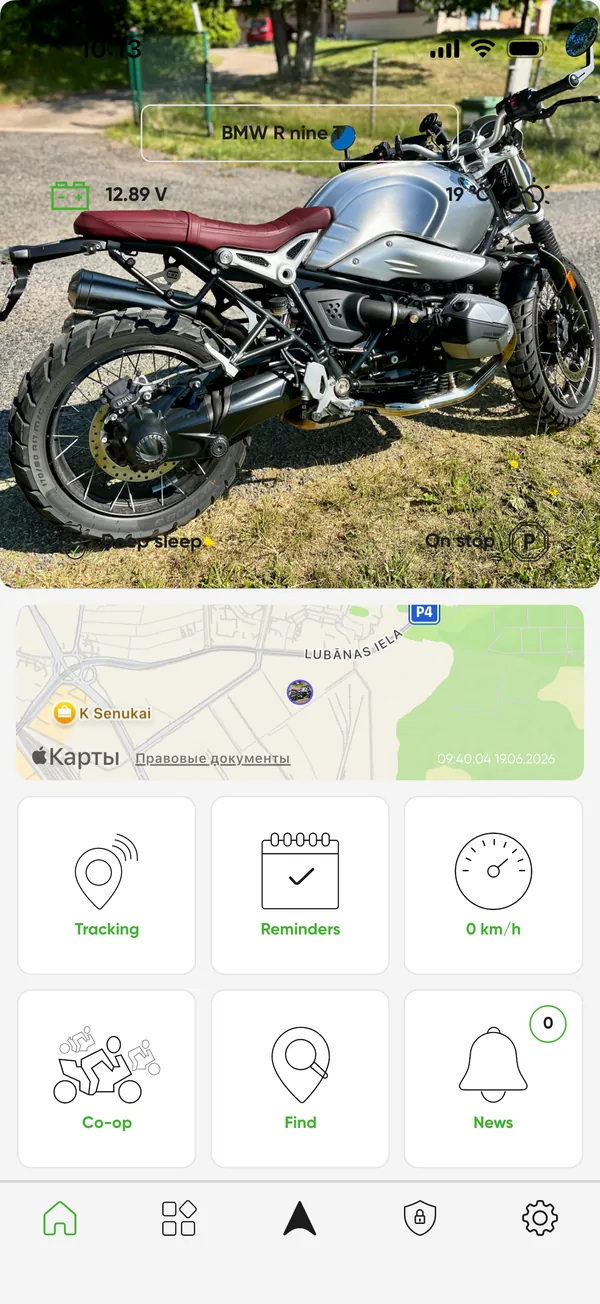
SIZZAPP offers real-time tracking, battery-voltage information and low-battery notifications in the SIZZAPP PRO app. These functions help you keep an eye on your motorcycle when you are away from it.
Voltage information is useful for monitoring changes, but it does not replace a battery condition test.
SIZZAPP trackers include connectivity without monthly subscription fees. For long-term parking, choose a suitable device and combine tracking with a battery-maintenance plan appropriate for your motorcycle.
Frequently asked questions
Can I leave a GPS tracker connected when the motorcycle is off?
Yes, if it is designed and installed for that use. Check its parked consumption and maintain the motorcycle battery appropriately, especially during extended inactivity.
Will a GPS tracker drain my motorcycle battery overnight?
There is no universal answer. If the battery loses starting capability overnight, have the battery and the motorcycle’s total electrical draw checked. That includes the tracker and other accessories.
Can a tracker work after the motorcycle battery is disconnected?
A tracker with a charged internal backup battery may continue operating temporarily. It will eventually need another power source or charging. Check the device’s specifications and operating conditions.
Does battery-voltage monitoring show the battery’s exact remaining capacity?
No. Voltage can help identify changes and potential charging needs, but it does not provide an exact measure of usable capacity or guarantee that the engine will start.
Should I disconnect my tracker for winter?
Decide this as part of your storage and security plan. Keeping a hardwired tracker powered requires maintaining its external supply. Disconnecting it may limit tracking to its temporary backup runtime.
A motorcycle GPS tracker uses energy. Choosing a suitable device, understanding its parked consumption and maintaining your battery lets you plan for both tracking and reliable starting.
Protege tu vehículo de por vida
Un rastreador GPS de verdad sin cuotas mensuales, SIM incluida.
Comprar ahora